What the world already knows about caring for dogs that Canada can still learn
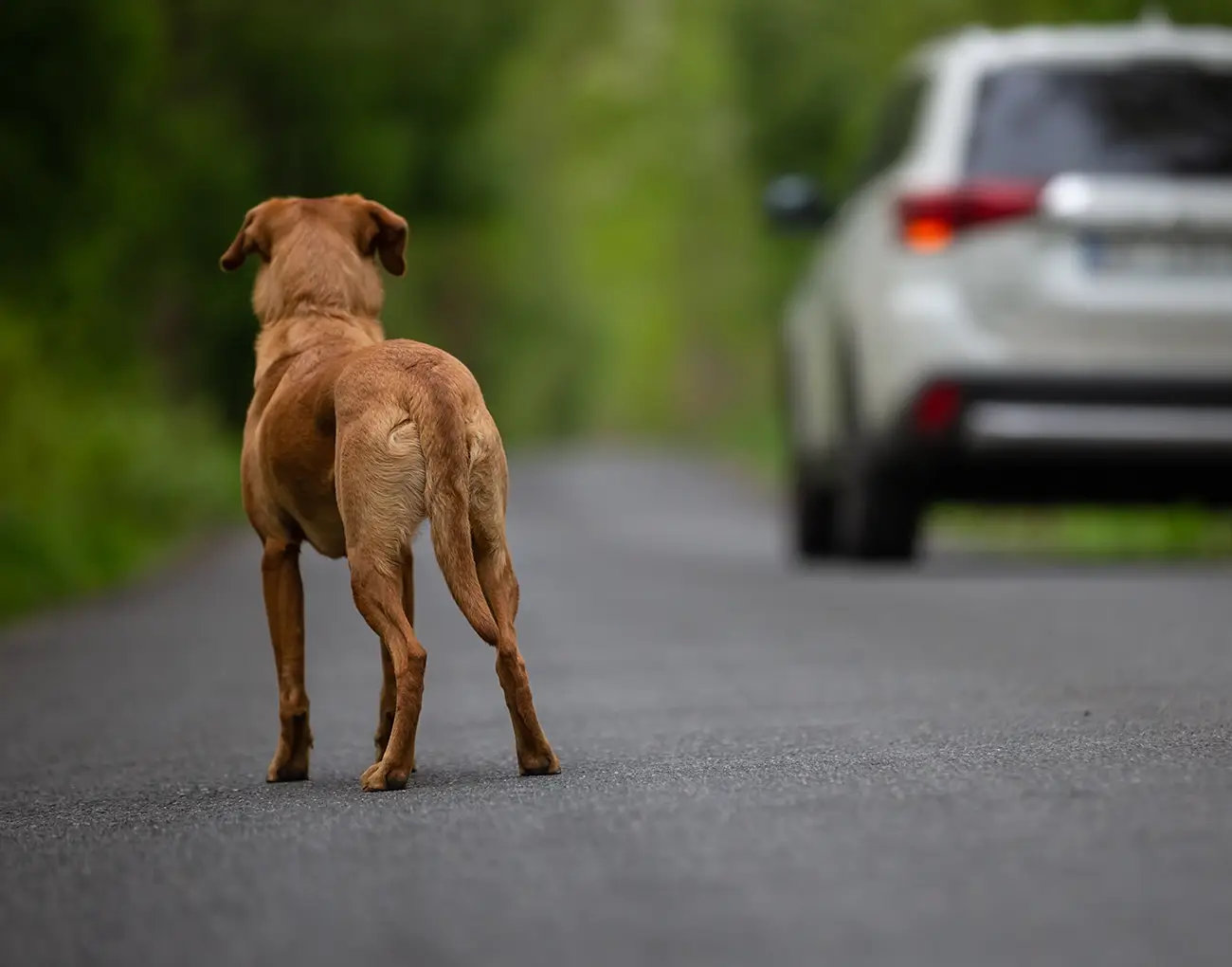
A few weeks ago, our community went through something no family should ever have to face. A dog who had wandered from home. A routine call. An outcome that should not have been possible.
I was present in that conversation, in the streets, on social media, in the community. And what I felt was not only grief. It was an uncomfortable clarity about what is missing: not only here, but in many places. The capacity to handle a distressed animal with competence, calm, and humanity.
That thought stayed with me. And it led me to a different question: what has the world already learned about this, and what can we, here in York Region, actually take from it?
This is not about loving animals. It is about having a system.
Most people who work with animals care about animals. That has never been the problem. The problem is that caring is not enough. Handling a dog that is frightened, disoriented, or in distress requires specific training, evidence-based protocols, and an institutional culture that places animal welfare at the centre of every decision.
It is the difference between reacting and knowing. Between restraining and communicating. Between a preventable incident and an outcome that leaves scars on an entire community.
When I look at what the most advanced countries have done in this area, I do not see magic. I see deliberate choices and public policy. I see training and a cultural shift that can take decades to build, but that always starts with someone saying: we can do better.
The Netherlands: the country that ended stray dogs without killing a single one
What is probably the most cited example in animal welfare conversations comes for a good reason: the Netherlands became the first country in the world to eliminate its stray dog population without resorting to mass euthanasia, after decades of consistent public policy.
The launch of a nationwide CNVR programme (Collect, Neuter, Vaccinate, and Return), funded by the government at a national level, was implemented across every municipality, while cities introduced higher taxes on dogs purchased from stores, encouraging adoption and freeing up shelter space for strays.
Paired with mandatory registration and microchipping, this meant that a dog found roaming was treated as a lost pet with a traceable owner, and not as a problem to neutralize.
A dedicated animal police force was created with full autonomy and its own mandate, not dependent on or an extension of any other service, responsible solely for investigating crimes against animals and rescuing those in distress.
“There is a direct link between the way a society treats its animals and the way it treats its citizens.” – Marianne Thieme, Party for the Animals, Netherlands
Fines for animal abandonment can reach 16,750 euros, and prison sentences for cruelty go up to three years. But what matters most is not the numbers themselves. It is what those numbers say about how seriously this country takes the subject.
Brazil: when public outrage becomes legislation
The country I come from, Brazil, is always considered a country of contrasts, and it is. But when it comes to animal protection law, the last several years have brought advances that few anticipated.
Brazil’s 1988 Constitution already established the government’s duty to protect animals from cruelty. For decades, that provision largely remained on paper, until public outrage, documented and amplified through social media, forced legislative action.
In 2020, the Lei Sansao (Law 14,064/2020) established prison sentences of up to five years, fines, and permanent bans on owning animals for crimes specifically targeting dogs and cats. In 2021, Law 14,228 explicitly prohibited public animal control agencies, the equivalent of what we know here as animal services, from euthanizing healthy dogs and cats. What happened here in our community in May 2026 would, under Brazilian law, require a criminal investigation.
During the catastrophic floods in southern Brazil in 2024, animals were included in daily rescue lists alongside people. An emergency line of credit was created for municipalities to spend on animal shelters. For the first time in Brazilian public policy history, animal welfare was treated as a humanitarian emergency.
The country I come from, I can proudly say, has learned, and is still learning, that caring for animals is not a luxury. It is a measure of the kind of society we want to be.
Germany and Austria: the principle that changes everything
German animal welfare law is built on a founding principle that is revolutionary in its simplicity: no one may cause an animal pain, suffering, or harm without a justifiable reason. It does not come from a list of prohibitions, but as a reversal of the burden of proof. From this point forward, the person who acts must justify, not the one who questions.
Austria went further still, establishing through its Animal Welfare Act of 2004 that the protection of animals must be held to a standard equal to human life, with prison sentences, fines, and permanent bans on keeping animals for those who violate that principle.
What these two countries share is an idea that seems straightforward but carries profound consequences: an animal that suffers unnecessarily is a problem for all of society, not only for the owner.
In 2024, Mexico wrote animal protection into its Constitution
Less expected, but no less significant: in 2024, Mexico elevated animal protection to a constitutional value, giving the government authority to legislate on welfare matters and making humane education mandatory in schools across the country.
When a country decides that children should grow up learning that animals deserve respect, it is making a long-term investment. Legislation changes behaviour. Education changes culture.
What this has to do with Canada, and with York Region
Canada has a great deal to be proud of when it comes to animal welfare. Ontario’s PAWS Act of 2019 brought meaningful improvements to enforcement and standards of care. There are training organizations here that teach evidence-based approaches grounded in the humane hierarchy of behaviour change.
But what happened in our community in May 2026 made something visible that we cannot look away from: good intentions and good legislation are not enough when field training does not reflect what canine behaviour science has known for decades.
A frightened dog is not a dangerous dog. A dog that resists is not an aggressive dog. A professional who knows the difference, and who has the training, the tools, and the protocol to act on that difference, is exactly what a community deserves to have working on its behalf.
Trust in a service is not built through uniforms. It is built through competence, through calm, through the ability to read an animal and respond with intelligence.
That is what we do, every day, at Paw de Janeiro. Not because we are required to, but because we believe that every dog deserves to be treated as what they are: a being with history, with emotions, and their own way of communicating. And that anyone who cares for them carries the responsibility of learning to listen.
What we can ask for, and what we should demand
The conversation that started in our community is not a conversation about blame. It is a conversation about standards, about what we want to become the baseline for everyone and any institution that interacts with our animals, whether that is a municipal service, a veterinary clinic, a dog walker, or a groomer.
Ongoing, evidence-based training in canine behaviour. Mandatory de-escalation protocols before any form of physical restraint. Public oversight and accountability for animal control services. And a culture that treats animal welfare for what it is: a matter of public health, community safety, and collective character.
Canada has the resources, the organizations, and the professionals to do this. What we need is political will, and the steady pressure of communities that will not accept less than the best the world has already shown is possible.
We stand with Heiniu’s family. We were there at the first protest, and we will continue to stand with this community for as long as it takes. Because this is not only about one dog. It is about the kind of care every animal in York Region deserves, and the standards we will not stop asking for.
Aline Dala Valle is the founder of Paw de Janeiro Pet Care, a cage-free dog grooming and walking service in Aurora, Ontario. The Daily Paw is Paw de Janeiro’s blog on canine wellness, preventive care, and life with dogs across York Region.